





100 years of performances
City Press Releases, Community Events
November 21, 2025
For a century, Memorial Auditorium and Convention Center (MACC) has been the heartbeat of Pittsburg’s performing arts scene.
To celebrate its one hundredth year, MACC is hosting a rededication ceremony at 6 p.m. on Nov. 25 at the auditorium, 503 N Pine, Pittsburg.
The auditorium hosted everything from student showcases and local theatre to big-name stars and award ceremonies.
“We’re thrilled to honor our past and celebrate with everyone as we look ahead to an exciting future,” MACC General Manager Darcie Shultz said. “Big things are coming, and we can’t wait to share what’s next.
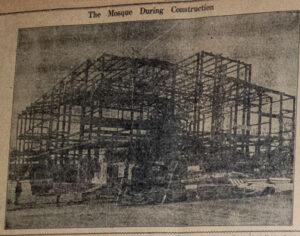
The Mirza Shriners kept thorough records of their history, and one notable item was the completion of their Temple at 5th and Pine Street in 1925.
In November of that year, following a ceremony, the “auditorium of the Temple was pronounced as one of the most beautiful in this part of the country”, its records stated. The notes shared that all electrical fixtures were “handmade specials”, the stage was 65 feet wide, the procession arch was 40 feet deep, and there was a seating area that held 2,244 people. It also noted that the banquet hall seats 2,000, features a hardwood floor for dancing, and boasts a beautiful stage scenery. The same entry stated that the first performances were by the Shrine Band, comprising 52 pieces.
On December 4, 1925, the first stage show presented for the public in the new building was “The Gingham Girl,” augmented with vaudeville acts. Shortly after, in January, the notes reported that “No, No, Nannette” was the first show to be sold out at the auditorium.
Not too long after, the Mirza Board recommended that the auditorium be offered to City Commissioners for use on Sunday afternoons for concerts. Later in the year, the Mirza Theatre company, which was charged with renting the building, contracted for two moving picture machines—they were now in the “picture show business”. In January 1927, Sammy Mandell, Lightweight Champion of the World, fought Jimmy Lanning, in the auditorium. Mandell won.
In December 1927, many stage shows were booked, such as “Ziegfield Follies”, “Harry Lauder”, “Earl Carroll Vanities”, “Dubusky Bros. Stock CO.”, and there were big film productions with sound effects such as “Birth of a Nation”. Will Rogers also performed on the auditorium’s stage during the twenties. And of course, there were also films and presentations about the Shriners’ philanthropic interest in helping children who were ill or injured, supporting what is now called Shriners Hospital for Children.
The Mirza Shriners later moved to their current location on 5th Street in the 1940s.
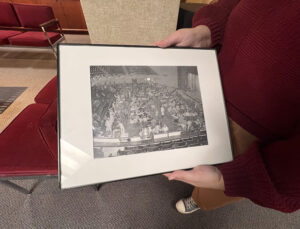
Memorial Auditorium pre-renovations
In 1945, the temple was purchased by the city of Pittsburg after voters approved the use of bonds in the purchase. The Memorial Auditorium was dedicated to the servicemen of WW1 and WW2, as well as the devoted women and Red Cross nurses who accompanied them.
Joella Reid-Skyles, who is on the Memorial Auditorium Advisory Board, is a retired teacher, and a past member of Pittsburg Community Theatre, recounted her memories of the auditorium. She has performed on stage and been musical director and director for several shows. In 1973, during Skyles’ first year of teaching in Pittsburg, at what was then Roosevelt Junior High, Reid-Skyles was asked to have her students perform several songs during a fundraiser.
That fundraiser was the Kiwanis Pancake Feed, which to this day still exists. In fact, they are having their 75th annual pancake feed and Santa’s workshop this year. The pancake feed is now in the lower level of the auditorium, rather than in front of the stage—grills and all—as before.
“We were on the stage, performing,” Reid-Skyles reminisced. “And, of course, the students were smelling the sausages, the bacon and the pancakes. They were ‘dying of hunger’, and they were singing. And, as you can imagine, it was smoky.”
All for the good, though, Reid-Skyles remembers, adding everyone is grateful for the kitchen and event space that now exists in the lower level.
The lower level
Speaking of the lower level, it was once a storage space and a garage. City vehicles were stored and maintained there.
However, it wasn’t a problem for those who were building scenery, Reid-Skyles shared.
“You could saw, nail and paint, or whatever,” she said. “But to get the scenery from the basement to the stage, you had to carry it. And the stairs haven’t really changed a whole lot between 1925 and 2025. They’re narrow, and scenery had to turn corners.”
Some of the scenery was up to 10 to 12 feet high or wide, which was necessary because, before renovations, the actual stage was wider. Following the renovations, the crew had a pit that would travel to and from the lower level, right up to the stage.
“It was a miracle to us that the pit went all the way down to the basement and you could just load your stuff on there and then ‘whoof’ up you could go,” Reid-Skyles explained.
The lower level of the auditorium now boasts a 10,207-square-foot event center. In addition, it can provide up to eight meeting areas for breakout space. The facility hosts various types of conventions, trade shows, consumer shows, private parties, wedding receptions and a variety of community events.
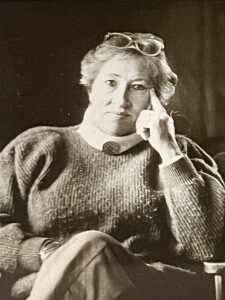
The renovation
There were many people who helped support fine arts in Pittsburg, but it was Beverly Corcoran, Reid-Skyles said, who pushed and led the way for the auditorium to not only continue to exist but be renovated. This renovation grew what the facility could provide for the community.
“She gathered together people in town who loved the fine arts, but who usually traveled to Kansas City and Tulsa, etc., to enjoy those things,” Reid-Skyles said.
That group of people Corcoran assembled was the start of the Pittsburg Area Arts and Crafts Association, PAACA for short. Corcoran coordinated art groups, painters, musicians, writers, poets, and performers of many types. The thought was, Reid-Skyles said, “if you’re going to do performances, it needs to be all under the same roof so we can get funding and support.”
Many shows were coordinated, and the auditorium started to become a well-oiled machine.
Soon after, the Pittsburg Community Theatre was also created.
“That [1981] was when the city was making the decision about whether to tear Memorial down or renovate it,” Skyles said. “And Bev said, ‘You cannot tear down this historic building.”
To Corcoran, it would have been an atrocity to no longer have Memorial Auditorium. So, she did what she did best and gathered people who were also just as passionate about the arts. They petitioned the city to hold an election to pass a sales tax for renovating and maintaining the auditorium.
With the philosophy of “if you build it, they will come” in mind, members of PAACA and PCT hit the streets of Pittsburg, going door-to-door sharing how the auditorium “can be home to every activity you can think of, community-wide, performance-wide,” Reid-Skyles reminisced. “We can bring in performers and performances from all over the world if we have the space. Please vote for this. When it passed, we were thrilled, just thrilled.”
Demolition work and renovations began. Now we have the Memorial Auditorium and Convention Center as we know it. In addition to lower-level updates, there’s now a green room, beautiful dressing rooms, cushioned seats, better stage lighting (improved more as technology changed), an effective sound amplification system, updated fly-weight rail curtain system, and space to move and ready sets and props to go on stage.
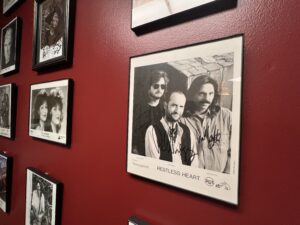
The shows
MACC continues to be the heartbeat of Pittsburg’s performing arts scene. It is widely used by members of the community. It’s fair to say that most area students have been to the auditorium for school presentations, theatre shows and educational programs.
Area dance companies, theatre organizations, orchestras, bands and more continue to liven the place with their art and talent.
Some notable figures most recently on stage were Casting Crowns, Ozark Mountain Daredevils, A.J. Croce, Aaron Lewis, and Travis Tritt. Back in the nineties and early two-thousands, the auditorium hosted George Carlin, Kenny Chesney, Tracy Lawrence, Charlie Daniels, Kenny Wayne Shepherd, the Judds, Larry Gatlin and the Gatlin Brothers, and The Association. Merle Haggard performed at MACC as well as Ray Charles.
Traveling shows of late include a Taste of Ireland, the Nutcracker (which is coming up this December), and Ada Twist who will perform in March. In the nineties, the auditorium also hosted an indoor circus—elephant and all.